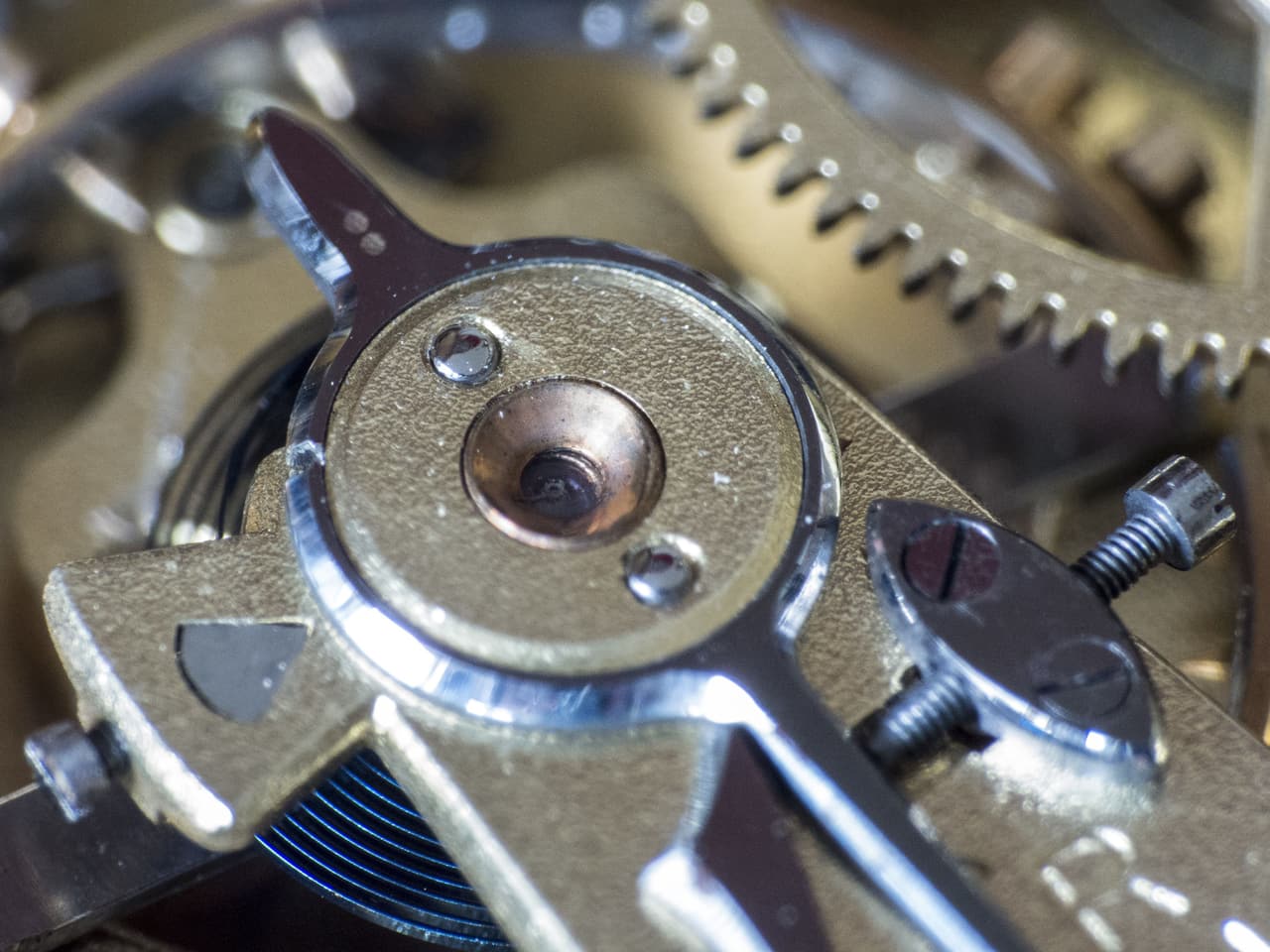
The best automatic watches
No batteries, no charging, and a movement you can watch working. Ten mechanical watches worth owning, and what you give up to own one.
The best automatic watch for most people is the Seiko 5 Sports - a real self-winding movement, visible through the caseback, for roughly a third of Swiss money. Step up to a Tissot PRX Powermatic 80 for an 80-hour reserve and a finished case, or an Orient Bambino if the budget is tight.
We earn a commission if you buy through the links on this page, at no extra cost to you. It does not change which gifts we pick or the order we rank them in. How we earn.
Quick picks
The short answer, ranked. Tap any row for the full reasoning, or go straight to the current price.
| # | Product | Best for | Score | Price |
|---|---|---|---|---|
| 1 | 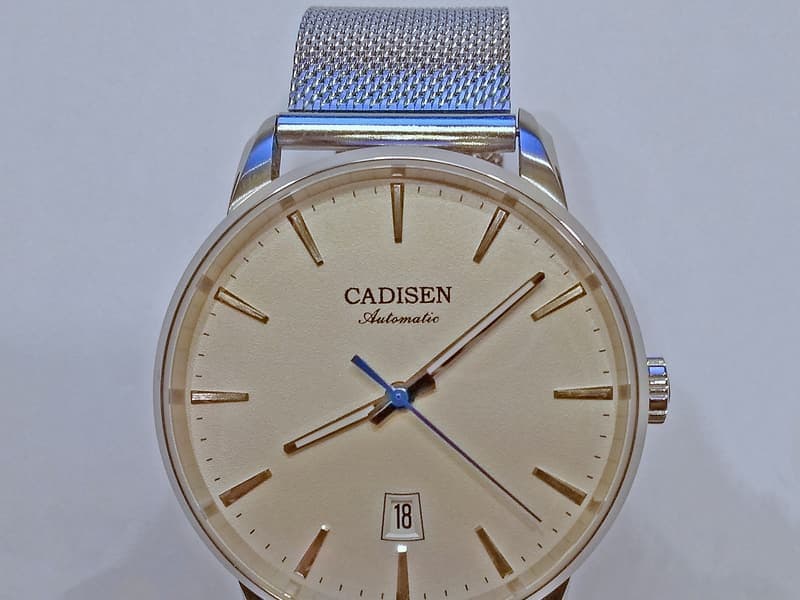 5 Sports SRPD field watch A real automatic movement for the price of a mid-range quartz. | The best automatic watch for the money, and the one most people should start with | 8.98.9 out of 10, our editorial score | |
| 2 |  PRX Powermatic 80, 40mm A Swiss automatic with an integrated bracelet that reads as far more expensive than it is. | The best automatic to own if you only own one | 9.39.3 out of 10, our editorial score | |
| 3 | 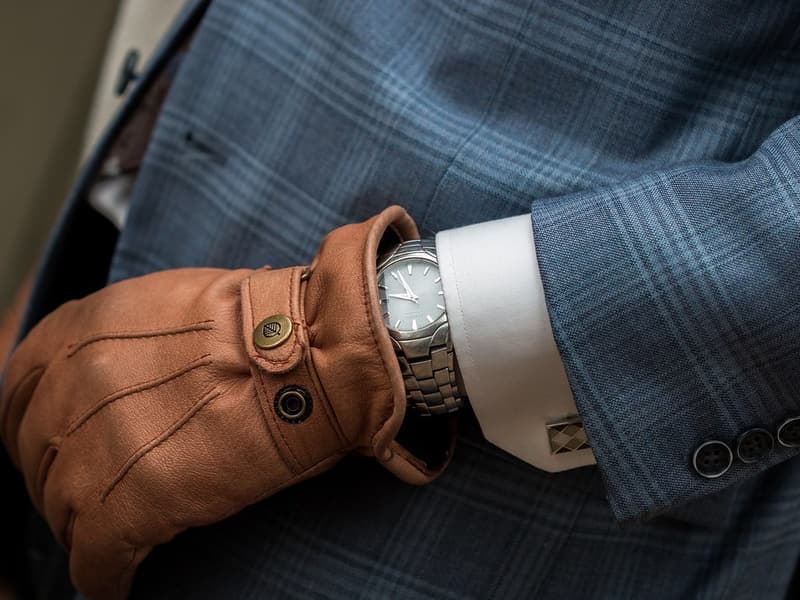 Bambino dress watch A dressy automatic with a domed crystal, at a price that makes no sense. | The budget pick, and the cheapest automatic that looks expensive | 8.58.5 out of 10, our editorial score | |
| 4 | 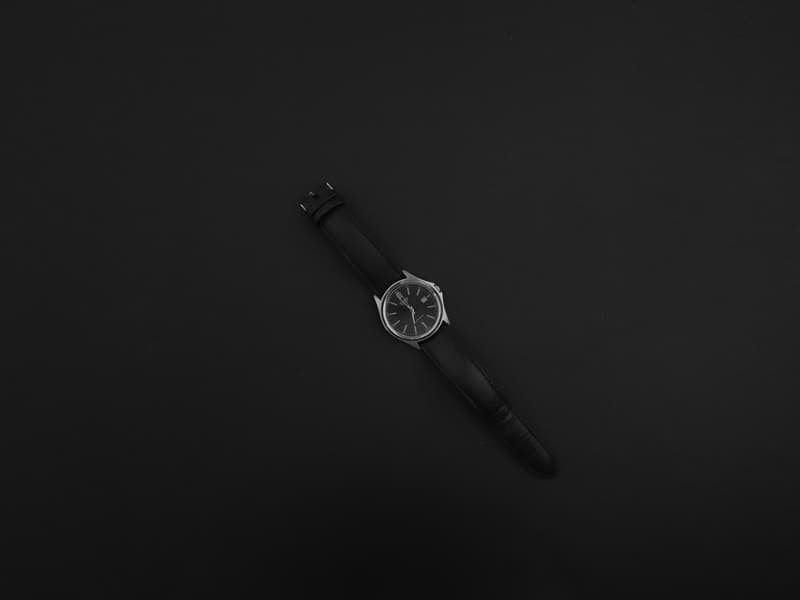 Khaki Field Automatic, 38mm A self-winding field watch that is hard to dislike and hard to wear wrong. | The least opinionated good automatic there is | 9.29.2 out of 10, our editorial score | |
| 5 |  Presage Cocktail Time automatic A pressed, faceted dial that looks like it belongs several thousand dollars up the range. | The dial you will keep looking at | 9.09.0 out of 10, our editorial score | |
| 6 |  Prospex automatic diver, cushion case A 200m automatic diver in the cushion case collectors nicknamed the Turtle. | An automatic you can actually swim in | 9.09.0 out of 10, our editorial score | |
| 7 |  DS PH200M automatic A faithful 1960s dive-watch reissue with a modern long-reserve movement inside. | The vintage look without the risks of a vintage watch | 8.88.8 out of 10, our editorial score | |
| 8 | 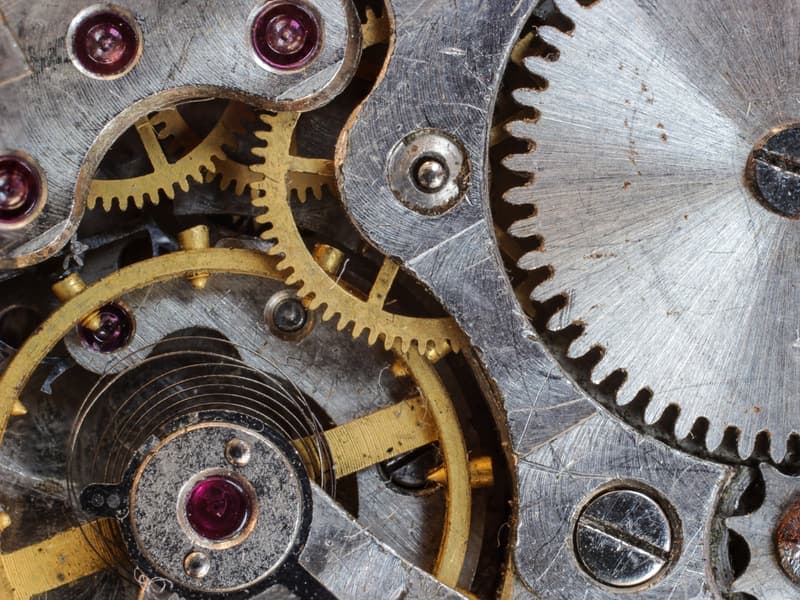 Orient Star Contemporary automatic A Japanese automatic with a power-reserve hand on the dial and an open caseback. | Someone who will open the caseback and look | 8.98.9 out of 10, our editorial score | |
| 9 | 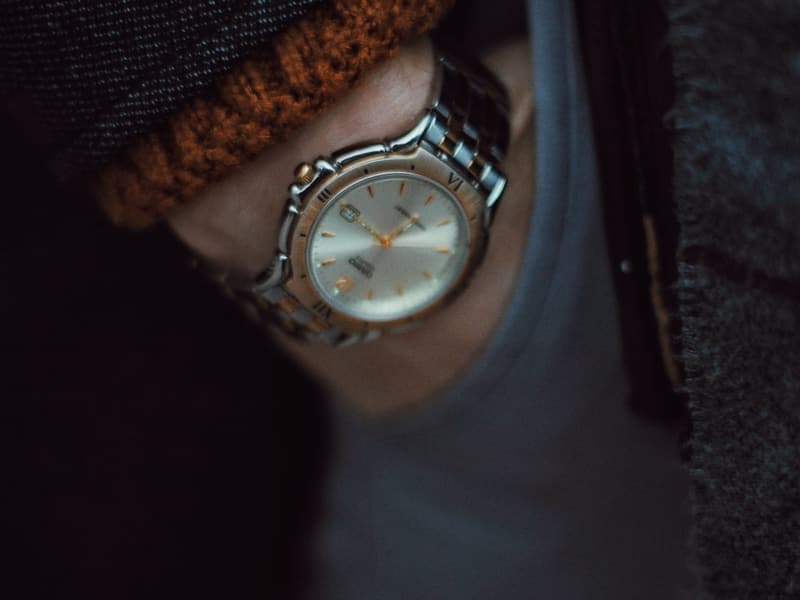 PRX Powermatic 80, 35mm The same Swiss automatic and bracelet, in the size most wrists actually suit. | A wrist under about 6.5 inches | 9.29.2 out of 10, our editorial score | |
| 10 | 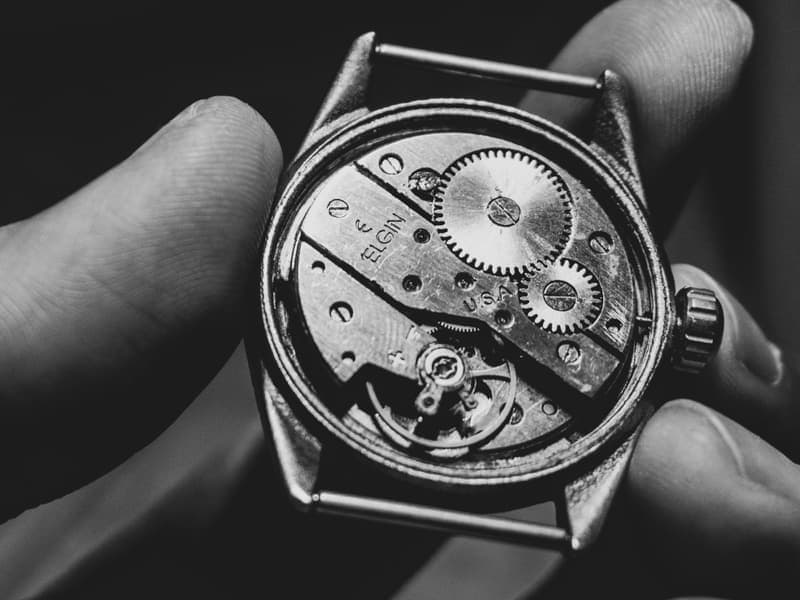 Khaki Field Mechanical, 38mm A hand-wound military field watch at the size the original actually was. | The hand-wound exception, for people who want the ritual | 8.98.9 out of 10, our editorial score |
Scores are our own editorial judgment, not lab measurements. How we score. Links are affiliate links — how we earn.
What "automatic" actually means
An automatic watch is a mechanical watch that winds itself. Inside is a weighted rotor that swings as your wrist moves, and that motion tightens a spring; the spring unwinds through a train of gears at a rate controlled by a balance wheel oscillating several times a second. There is no battery anywhere in it, and there never needs to be.
That is the whole appeal, and it is worth being clear that it is an aesthetic appeal rather than a practical one. A twenty-dollar quartz watch keeps better time than every watch on this page. What a quartz watch cannot do is be a small machine running on your wrist, which is the thing people who like watches actually like.
The word "automatic" specifically means self-winding. A hand-wound watch - one you wind with the crown every morning - is mechanical but not automatic. One pick on this page is hand-wound and is flagged as such, because it is genuinely the better buy for some people and pretending otherwise would be dishonest.
What you give up
Most pages about automatic watches skip this part. It matters more than the spec sheet.
Accuracy. A good automatic runs within about five to fifteen seconds a day. A cheap quartz runs within fifteen seconds a month. If being a minute out by the end of the week would bother you, buy quartz and do not look back.
It stops. Leave an automatic in a drawer and it dies in a day or two - or in about three days with the long-reserve movements on this page. Picking it up means resetting the time and often the date. For someone who rotates between several watches this is a genuine, recurring annoyance.
Servicing. Every mechanical watch eventually needs stripping and re-oiling, realistically somewhere between five and ten years, and it is not cheap. On the watches at the lower end of this page a full service can cost a meaningful fraction of what the watch cost new, which is a real argument for buying the cheap ones as wear-until-they-stop objects rather than heirlooms.
Price. The cheapest watch here costs several times the cheapest decent quartz. You are paying for the mechanism, not for performance - quartz versus automatic watches is the head-to-head if you are still deciding, and best watches under $100 is the honest alternative if the answer turns out to be quartz.
The criteria we applied
Ten watches made this page. Each had to clear five tests, in this order.
The movement is made by a company that makes movements. Seiko, Orient, ETA and the Swatch Group's Powermatic line, or Miyota. This is not snobbery - it is the only reliable guarantee that a watchmaker can still get parts in fifteen years. It is also the test that removes most small brands assembling bought-in movements into nice cases.
It is currently sold new, by the maker. No discontinued references and no gray-market-only models. A mechanical watch is a long-term object and the warranty is part of what you are buying.
Sapphire crystal above roughly $300. Below that, mineral glass is the honest trade and the cheaper picks here have it. Above it there is no excuse: a scratched crystal is the first thing the owner sees every time they check the time.
It does one thing clearly. Dress, field, dive, everyday steel. A mechanical watch that tries to be all of them is a watch with no occasion it is obviously right for.
No skeleton dials from unknown brands. The single biggest trap in cheap automatics is a see-through dial on a generic movement in a case nobody will service. They look like the most watch for the money and they are the least.
Which automatic, by what you want from it
| What you want | Buy this | Why it is the answer |
|---|---|---|
| A real mechanical watch, cheapest route in | A Japanese automatic field watch | In-house movement, exhibition caseback, a third of Swiss money |
| One automatic for every occasion | An integrated-bracelet Swiss automatic | 80-hour reserve, so it survives a weekend off the wrist |
| Something for a jacket, on a budget | A domed-crystal dress automatic | Reads several times its price; the cheapest smart answer |
| A watch that goes with literally everything | A 38mm field automatic on a strap | No styling opinion at all, which is the point |
| The best-looking thing at the money | A textured-dial dress automatic | Dial finishing is where the cost shows most |
| To swim in it | A 200m automatic diver | Screw-down crown and lume that works at night |
| Vintage looks, modern reliability | A 1960s dive-watch reissue | The old case shape with a warranty behind it |
| To see the mechanism working | An automatic with a power-reserve dial | The remaining wind is visible on the front and the back |
| Wrist under 6.5 inches | A 35mm automatic | Most automatics start at 38mm; this is the one that fits |
| The ritual of winding it yourself | A hand-wound field watch | Thinner, cheaper, and deliberately not automatic |
Power reserve is the spec that matters
If you only compare automatics on one number, make it the power reserve - how long the watch runs after you take it off. The standard at this price has been about 38 to 42 hours for decades, which means a watch taken off on Friday evening is stopped by Sunday.
The newer long-reserve movements roughly double that. The Powermatic 80 in both Tissot picks here holds about 80 hours, which is the difference between a mechanical watch you live with and one you keep resetting. For anyone who owns more than one watch, or who does not wear a watch at the weekend, this single spec changes the ownership experience more than case finishing or dial texture ever will.
The alternative fix is a watch winder - a motorized box that rocks the watch while it sits unworn. They work, they cost money, and for one or two watches they solve a problem a longer reserve solves for free.
Sizing a mechanical watch
Automatics skew larger than quartz watches because the movement is physically bigger, and a lot of the category still sits at 40mm and up. That makes sizing the most common way this purchase goes wrong.
Under about 6.5 inches of wrist, you want 35mm to 37mm, and the honest truth is that the choice narrows sharply there - the 35mm pick on this page exists precisely because so little else does. Between 6.5 and 7.25 inches, 38mm to 40mm covers nearly everything here. Above that, the divers and the 40mm cases are comfortable.
Two numbers matter more than the headline diameter. Lug-to-lug decides whether the watch sits flat or overhangs the wrist, and thickness decides whether it slides under a cuff - and automatics are thick, which is why the dive pick here carries a wrist-size warning the dress picks do not. What size watch to buy has the full method, and how to measure a watch strap has the numbers if you want to buy a second strap alongside.
Looking after one
Almost nothing, for the first few years. Wear it and it winds itself. If it has been sitting, give the crown twenty or thirty turns to get it started rather than shaking it.
Two things genuinely matter. Do not adjust the date between roughly 9pm and 3am on most movements - the date mechanism is engaged during that window and forcing it is a common and expensive way to break a watch. And keep it away from strong magnets, which includes laptop speakers, tablet covers and handbag clasps; a magnetized watch suddenly running minutes fast per day is one of the most common faults a watchmaker sees, and demagnetizing takes seconds.
On water: an automatic rated 50m is fine for rain and hand-washing, not swimming. Only the 200m divers here are genuinely swimmable, and the screw-down crown has to be screwed shut. Water resistance explained covers what each rating actually permits.
What to avoid in automatics
Cheap skeleton and open-heart dials. Covered above and worth repeating: these are the most common bad buy in the category. The watch is showing you a movement precisely because the movement is the only interesting thing about it.
Fashion-brand automatics. A clothing or handbag label selling a mechanical watch is selling a bought-in movement at several times what the same movement costs elsewhere. Every brand here makes watches as its actual business.
Unbranded "Swiss movement" listings. If a listing will not name the movement - ETA 2824, Sellita SW200, Seiko 4R35, Miyota 8215 - assume there is a reason.
Buying one as a first watch for someone careless. A mechanical watch is a worse gift than a quartz one for a teenager, a tradesperson or anyone hard on their things. Best watches under $100 has the right answers for that.
Expecting it to hold value. Nothing on this page is an investment. Buy it because you want to wear it for twenty years.
Where to go next
If you have not settled on mechanical yet, the best watches runs the same category without excluding quartz, and it is the better page if what you actually want is one good watch rather than a mechanical one specifically. If this is a first watch, best watches for beginners narrows the field and explains which of these are forgiving to start with.
By budget, best watches under $200 is where the first automatics appear, best watches under $500 is where the Swiss ones start, and best watches under $1,000 covers the band most of this page sits in. For someone who already owns two or three, gifts for watch lovers is the page where the right answer is a roll or a strap rather than another watch.
Prices move with exchange rates and dealer promotions, and the same reference can sit a hundred dollars apart across a few months. Nothing here quotes a figure - each pick links to the current price so you are deciding against what you will actually pay.
The picks, in full
Every pick includes who it is wrong for. Prices move constantly, so we link to the current one rather than printing a number that goes stale.
#ad Prices move; we link you to the current one. How we earn
1. The best automatic watch for the money, and the one most people should start with
5 Sports SRPD field watch
Seiko
A real automatic movement for the price of a mid-range quartz.
This is the cheapest watch in the world that is unarguably a real mechanical watch: a Seiko in-house automatic, wound by the motion of your wrist, running behind an exhibition caseback so you can watch it happen. There is no battery and never will be. It keeps time to within a handful of seconds a day rather than a month, the finishing is plain once you look closely, and the 40mm case wears larger than the number suggests. None of that is the point. The point is that for roughly a third of what the Swiss charge, this does the thing you are actually buying a mechanical watch for.
Skip it if: They want perfect accuracy — a mechanical watch drifts by seconds a day, by design.
- Safe bet
- 8.4
- Thoughtful
- 9.4
- Value
- 9.0
- Gets used
- 8.8
#ad Prices move; we link you to the current one. How we earn
2. The best automatic to own if you only own one
PRX Powermatic 80, 40mm
Tissot
A Swiss automatic with an integrated bracelet that reads as far more expensive than it is.
The Powermatic 80 movement is the argument: roughly 80 hours of power reserve against the 40-odd hours that is normal at this price, which is the difference between a watch that is still running on Monday morning and one you have to reset every week. That single spec is what makes a mechanical watch livable for someone who also owns other watches, or who does not wear one every day. The integrated steel bracelet means it covers an office and a weekend without a strap change, and the case is properly finished rather than merely clean.
Skip it if: Their wrist is under about 6.5 inches, or they already wear a steel sports watch daily - buy the 35mm version or something dressier instead.
- Safe bet
- 9.4
- Thoughtful
- 8.8
- Value
- 9.6
- Gets used
- 9.2
#ad Prices move; we link you to the current one. How we earn
3. The budget pick, and the cheapest automatic that looks expensive
Bambino dress watch
Orient
A dressy automatic with a domed crystal, at a price that makes no sense.
Orient makes its own movements, which is why this exists at a price that otherwise buys a fashion-brand quartz. The domed crystal and slim case do most of the work - it reads as a dress watch costing several times more, and for anyone who owns nothing to wear with a jacket it closes that gap for very little. The movement is basic by Orient's own standards, it hand-winds stiffly, and the accuracy is at the loose end of acceptable. At this money those are not complaints, they are the deal.
Skip it if: Their life has no occasions that call for a dress watch.
- Safe bet
- 8.0
- Thoughtful
- 9.2
- Value
- 9.2
- Gets used
- 7.6
#ad Prices move; we link you to the current one. How we earn
4. The least opinionated good automatic there is
Khaki Field Automatic, 38mm
Hamilton
A self-winding field watch that is hard to dislike and hard to wear wrong.
A black-dial, 38mm field watch on a strap is the least opinionated good watch there is - it does not announce a style, a price or a hobby, and it suits everything the recipient already owns. The automatic movement means no winding ritual and no battery to replace, and the sapphire crystal means it still looks new in three years. This is the low-risk pick on the page.
Skip it if: You want the gift to be visibly special - this is deliberately plain, and plain is the feature.
- Safe bet
- 9.6
- Thoughtful
- 8.4
- Value
- 9.4
- Gets used
- 9.4
#ad Prices move; we link you to the current one. How we earn
5. The dial you will keep looking at
Presage Cocktail Time automatic
Seiko
A pressed, faceted dial that looks like it belongs several thousand dollars up the range.
The whole argument for this watch is the dial: a deep radial texture under a domed crystal that changes with the light, which is the kind of finishing usually reserved for far more expensive watches. It is a dress watch, so it is thin, it comes on leather, and it is the right gift for someone who wears a jacket to things rather than someone who climbs over fences.
Skip it if: They need something they can swim in or knock about in - this is a watch for an occasion, not a tool.
- Safe bet
- 8.8
- Thoughtful
- 9.4
- Value
- 9.6
- Gets used
- 8.0
#ad Prices move; we link you to the current one. How we earn
6. An automatic you can actually swim in
Prospex automatic diver, cushion case
Seiko
A 200m automatic diver in the cushion case collectors nicknamed the Turtle.
If the person you are buying for swims, sails or simply never takes a watch off, this is the category and this has been the long-standing default inside it. Two hundred meters of water resistance, a screw-down crown, a one-way bezel and lume that is genuinely readable at night. It is also one of the few watches at this money with a nickname, which tells you how long it has been the recommendation.
Skip it if: Their wrist is under about 6.75 inches or they wear shirt cuffs - this is a thick, wide watch and it does not hide.
- Safe bet
- 8.6
- Thoughtful
- 9.0
- Value
- 9.4
- Gets used
- 9.0
#ad Prices move; we link you to the current one. How we earn
7. The vintage look without the risks of a vintage watch
DS PH200M automatic
Certina
A faithful 1960s dive-watch reissue with a modern long-reserve movement inside.
Vintage dive watches are the look a lot of people actually want and a bad idea to buy for someone else - servicing, water resistance you cannot trust, and no warranty. This is the reissue answer: the 1960s case shape, the domed crystal and the no-date dial, with a current Swiss movement and real water resistance behind it. The Certina name is unfamiliar in the US, which is most of why it costs what it does.
Skip it if: They would rather have a brand their friends recognize - this is an enthusiast's pick, not a status one.
- Safe bet
- 7.8
- Thoughtful
- 9.4
- Value
- 9.2
- Gets used
- 8.6
#ad Prices move; we link you to the current one. How we earn
8. Someone who will open the caseback and look
Orient Star Contemporary automatic
Orient
A Japanese automatic with a power-reserve hand on the dial and an open caseback.
Orient Star is Orient's upper line and it makes its own movements, which is unusual at this money - most watches in this band buy a movement from a supplier. What you get for it is the enthusiast detail: a power-reserve indicator on the dial so the remaining wind is visible, and a sapphire caseback so the movement is too. It is the pick for a recipient who will actually look at the watch.
Skip it if: They want a watch they never think about - the power-reserve dial exists to be checked, and that is either the appeal or noise.
- Safe bet
- 8.0
- Thoughtful
- 9.4
- Value
- 9.6
- Gets used
- 8.4
#ad Prices move; we link you to the current one. How we earn
9. A wrist under about 6.5 inches
PRX Powermatic 80, 35mm
Tissot
The same Swiss automatic and bracelet, in the size most wrists actually suit.
The 35mm is not a stripped-down version of the 40mm - it is the same movement, the same integrated bracelet and the same dial colors in a case that fits a wrist under about 6.5 inches properly. That matters for a gift, because the most common way a watch goes wrong is being too big and spinning on the wrist. If you are unsure of their size and they are not large-framed, this is the safer of the two.
Skip it if: They wear large watches by choice - dropping to 35mm on a big wrist reads as borrowed.
- Safe bet
- 9.2
- Thoughtful
- 8.8
- Value
- 9.4
- Gets used
- 9.2
#ad Prices move; we link you to the current one. How we earn
10. The hand-wound exception, for people who want the ritual
Khaki Field Mechanical, 38mm
Hamilton
A hand-wound military field watch at the size the original actually was.
This has no battery and no automatic winding rotor - it is wound by hand every day or two, which is either the entire appeal or a dealbreaker, with very little in between. The 38mm case is close to the mid-century field watch it copies, the dial is legible in a way modern watches often are not, and the strap is fabric, so it costs almost nothing to change the look later.
Skip it if: They would resent a daily winding ritual, or they want something they can leave in a drawer for a week and pick straight back up.
- Safe bet
- 8.4
- Thoughtful
- 9.6
- Value
- 9.2
- Gets used
- 8.2
Questions people ask
What is the best automatic watch?
For most buyers, the Seiko 5 Sports - a genuine in-house automatic with an exhibition caseback for roughly a third of Swiss money. If you want one mechanical watch that covers every occasion, the Tissot PRX Powermatic 80 and its 80-hour reserve is the better answer.
Are automatic watches worth it?
Only if you want the mechanism. A cheap quartz watch keeps far better time than any automatic at any price. What you are buying is a small machine with no battery that winds itself from your movement, and whether that is worth several hundred dollars is a question about taste, not performance.
How accurate are automatic watches?
A good one runs within roughly five to fifteen seconds a day. Quartz runs within about fifteen seconds a month. If a minute of drift across a week would annoy you, buy quartz.
What happens if you do not wear an automatic watch?
It stops - usually within a day or two, or about three days on the long-reserve movements. You then reset the time and date and wind it, or you buy a watch winder. A longer power reserve is the cheaper fix.
How often do automatic watches need servicing?
Realistically every five to ten years, and it is not cheap. On the lower-priced watches here a full service can cost a meaningful share of what the watch cost new, which is a fair reason to treat a budget automatic as something to wear rather than an heirloom.
What is the difference between automatic and mechanical?
Automatic means self-winding - a rotor winds the spring as your wrist moves. Hand-wound watches are mechanical too, but you wind them with the crown each day. Both are battery-free; one pick on this page is hand-wound and is marked as such.
What is a good power reserve for an automatic watch?
About 38 to 42 hours is the long-standing standard, which means a watch taken off Friday night has stopped by Sunday. The newer long-reserve movements hold roughly 80 hours, and that is the single spec that most changes what owning a mechanical watch feels like.
Can automatic watches get wet?
Depends entirely on the rating. 50m covers rain and hand-washing, not swimming. Only the 200m divers on this page are genuinely swimmable, and only with the screw-down crown screwed shut.
References
Still deciding?
Narrow it down by who you are buying for, or set a number and work from there.
Part of Gifts by interest.