Watch water resistance, explained
The number on the dial is not a depth. It is a pressure test, and that is why 50m does not mean fifty meters.
50m water resistant means a watch survives splashes, rain and hand-washing - not swimming. The ratings come from static pressure tests, and movement multiplies the pressure water applies, so you need 100m for swimming and 200m for anything involving diving or impact with water.
We earn a commission if you buy through the links on this page, at no extra cost to you. It does not change which gifts we pick or the order we rank them in. How we earn.
The numbers are not depths
This is the single most useful thing to understand about water resistance, and almost every dial on the market is misleading about it. A watch marked 50m has not been tested at fifty meters of water. It has been held at a static pressure equivalent to five atmospheres, in a laboratory, at a stable temperature, while nothing moved.
Real water does not behave like that. Swinging an arm through water, diving in, or turning on a tap all apply pressure far above the equivalent still depth - a jet from a shower head or the impact of hitting water from a dive can exceed the test pressure of a 50m watch comfortably. That is the whole reason the marked number and the useful number are different.
So the ratings should be read as categories of activity, not distances. Here is the translation.
What each rating actually allows
| Marking | Safe | Not safe |
|---|---|---|
| No marking, or "water resistant" | Keeping it dry | Everything else, including rain |
| 30m / 3 ATM | Rain, a splash at a sink | Showering, washing up, swimming |
| 50m / 5 ATM | Rain, hand-washing, a brief soaking | Swimming, showering, watersports |
| 100m / 10 ATM | Swimming, snorkelling, showering | Scuba diving, high-impact water entry |
| 200m / 20 ATM | Swimming, surfing, recreational diving | Saturation diving (needs a dive rating) |
The practical rule for a gift: 50m is the minimum for everyday life and 100m is the minimum if they swim. Anything under 50m is a watch that has to be taken off, and a watch that has to be taken off is a watch that gets left on a windowsill.
Why showering is worse than swimming
This surprises people and it is the most common way a watch is ruined. A shower combines three things water resistance handles badly: pressurized jets, heat, and soap. Heat expands the case and the gaskets at different rates, which opens microscopic gaps; soap and shampoo degrade rubber seals over time; and the jet applies far more pressure than standing in a pool does.
A 100m watch will survive showers indefinitely. A 50m watch will survive a few and then one day will not, and the failure is usually discovered as condensation under the crystal. The sensible advice to pass on with the gift is simply: take it off in the shower, wear it in the pool if it is rated for it.
The crown is the actual weak point
Ratings assume the watch is sealed, and on most watches the seal depends on the crown - the small knob used to set the time - being pushed fully in. Many watches above 100m use a screw-down crown, which has to be threaded closed. A watch left with its crown out, even slightly, has no water resistance at all regardless of what the dial says.
If you are giving a watch to somebody who has never owned one, this is the one piece of care information worth putting in the card. It is also worth knowing that gaskets are consumable: they perish over several years, so a ten-year-old watch does not have the water resistance its dial claims unless it has been resealed.
Which rating to buy as a gift
They work in an office and own an umbrella. 50m is genuinely fine, and it opens up the entire dress-watch category. Most slim, elegant watches sit at 30m or 50m because thick seals and screw-down crowns add bulk.
They swim, even occasionally. 100m, no compromise. This is the most common mismatch in watch gifting - a beautiful 30m dress watch given to somebody who swims twice a week.
They surf, dive, sail or fish. 200m. At this level water stops being a consideration and that is worth the loss of elegance.
They are a teenager, or hard on their things. 200m, and ideally in resin rather than steel. A watch that can be forgotten in a pocket through a wash is the watch that survives.
They work with their hands. 100m minimum, and a metal bracelet rather than leather - leather vs metal watch straps covers why leather and water do not coexist.
Terms on dials, translated
"Water resistant" with no number. Treat as not water resistant. It is the least informative marking in the industry.
"Waterproof". Should not appear on a modern watch at all - no watch is permanently impervious, and the term has been discouraged for decades. On a new watch it is a sign of a seller writing their own copy.
ATM, BAR and meters. Interchangeable in practice: 5 ATM, 5 BAR and 50m all describe the same test.
"Diver's 200m". Different and stricter. A watch marked "diver's" has passed a separate standard involving thermal shock, salt water and sustained pressure, not just the single static test. If somebody actually dives, that word matters.
What to do if it gets wet anyway
Rinse it in fresh water if it was salt water, dry it with a cloth, and check for condensation inside the crystal. Condensation means water is already in the case, and the sensible move is to get it opened and dried rather than hoping it evaporates - the damage from water sitting against a movement happens over weeks, not minutes.
Where to go next
Water resistance is one of four things to check before buying a watch as a present. The others are case size, movement and strap. What size watch to buy covers sizing, quartz vs automatic watches settles the movement, and is a watch a good gift is the page to start from if the whole idea is still open.
For the watches themselves, the best watches under $500 and the best watches under $200 list what each tier offers, and gifts for watch lovers covers the recipient who already owns several.
What to buy
Every pick includes who it is wrong for. Prices move constantly, so we link to the current one rather than printing a number that goes stale.

#ad Prices move; we link you to the current one. How we earn
1. The safe answer when the recipient is anywhere near water
G-Shock DW5600E
Casio
The square G-Shock. Effectively indestructible, and quietly fashionable again.
A 200m rating, a sealed resin case and nothing on it that minds being soaked, dropped or forgotten in a pocket through a wash cycle. If the person you are buying for swims, surfs, works outdoors or is a teenager, this removes the entire question - and it is the rating level where water stops being something you have to think about at all.
Skip it if: They need something that works with a suit.
- Safe bet
- 9.0
- Thoughtful
- 8.0
- Value
- 9.4
- Gets used
- 9.2
#ad Prices move; we link you to the current one. How we earn
2. A 100m rating in a watch that still looks like a proper watch
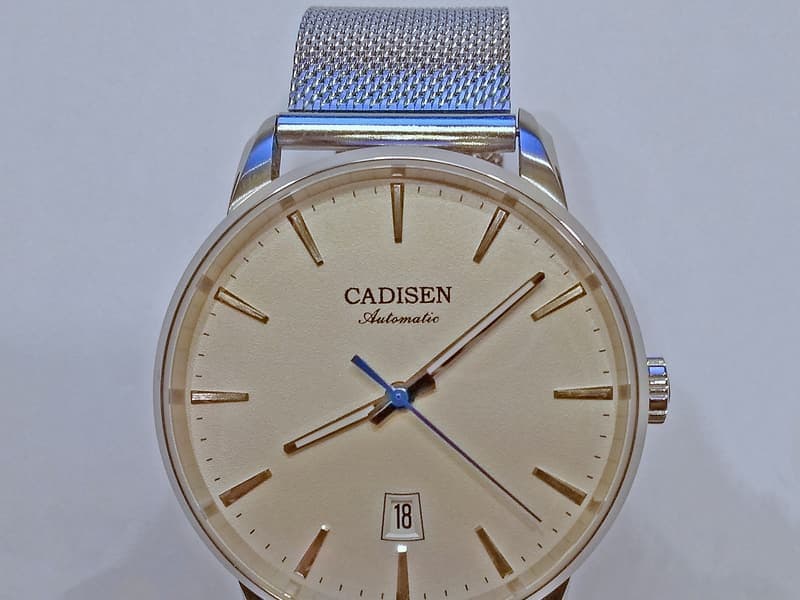
5 Sports SRPD field watch
Seiko
A real automatic movement for the price of a mid-range quartz.
One hundred meters is the practical threshold for swimming, and this is the pick that reaches it without becoming a tool watch. The thing to know is that it is an automatic with a screw-down crown arrangement to respect - the seals only work if the crown is fully home, which is the most common way a water-resistant watch gets wet inside.
Skip it if: They want perfect accuracy — a mechanical watch drifts by seconds a day, by design.
- Safe bet
- 8.4
- Thoughtful
- 9.4
- Value
- 9.0
- Gets used
- 8.8
#ad Prices move; we link you to the current one. How we earn
3. A dress watch rated for real life rather than only for rain
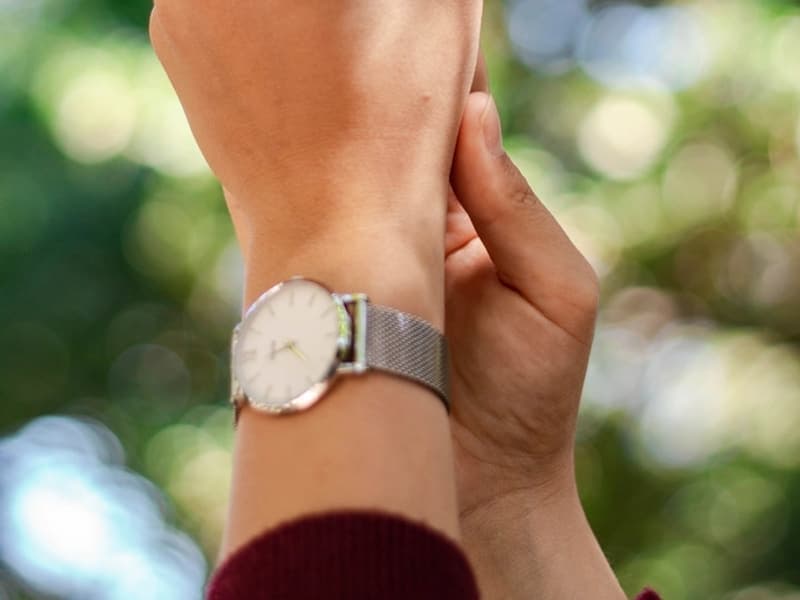
Eco-Drive solar watch
Citizen
Charges from light. Set it once and leave it for a decade.
Solar-charging quartz is the most practical watch technology there is: accurate to seconds a month, no winding, no battery changes, no servicing. For a gift to an older recipient or anyone impatient with maintenance, this is the right answer and the dress-watch styling suits most wrists.
Skip it if: They want the mechanical thing specifically — this is a quartz movement and proud of it.
- Safe bet
- 9.0
- Thoughtful
- 8.4
- Value
- 8.8
- Gets used
- 9.0
Questions people ask
What does 50m water resistant mean on a watch?
It means the watch passed a static pressure test equivalent to 50 meters, which in practice allows rain, hand-washing and a brief soaking. It does not allow swimming or showering, because movement and pressurized jets apply far more pressure than still water at the same depth.
Can you swim with a 50m water resistant watch?
No. 100m is the practical minimum for swimming. The ratings come from still-water pressure tests, and swinging an arm through water easily exceeds the pressure a 50m watch was tested at.
Why can't you shower with a water resistant watch?
A shower combines pressurized jets, heat and soap. Heat expands the case and gaskets at different rates, soap degrades the rubber seals over time, and the jet applies more pressure than standing in a pool. A 100m watch handles it; a 50m watch eventually will not.
What water resistance should a gift watch have?
50m is fine for an office worker who owns an umbrella, and it opens up the whole dress-watch category. Choose 100m if the recipient swims at all, and 200m if they surf, dive, work outdoors or are a teenager.
References
Still deciding?
Narrow it down by who you are buying for, or set a number and work from there.
Part of Gift guides and how-to.